
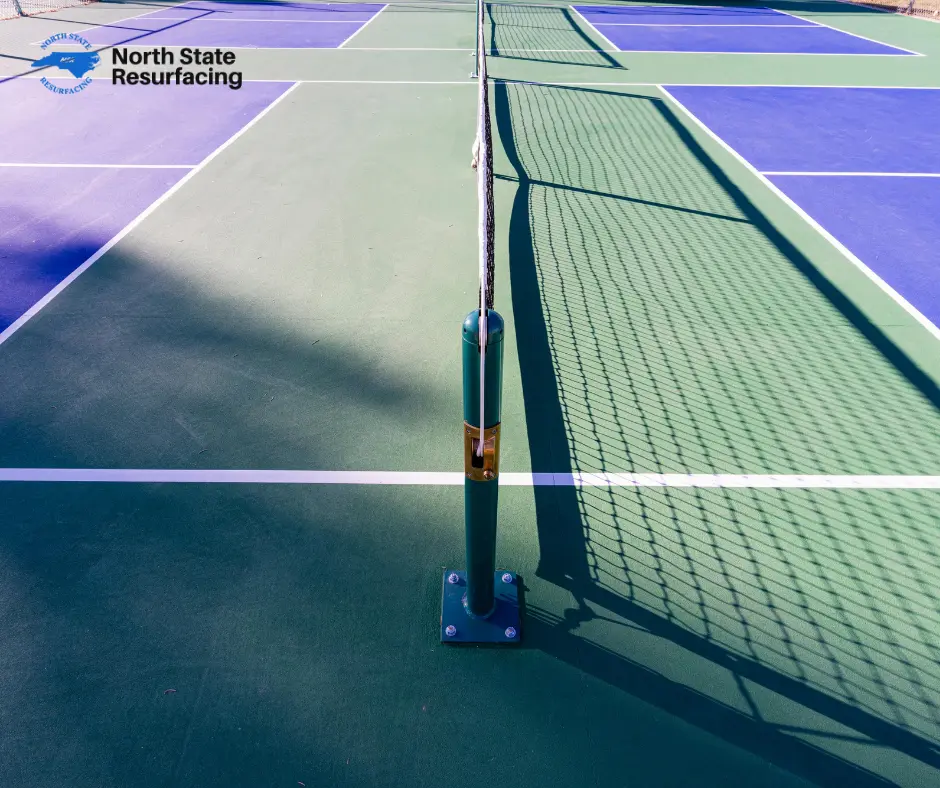
Pickleball has seen a huge boom throughout the country in the past couple of years, and North Carolina is no exception. Many homeowners, HOAs, and community developers are considering building their own courts to meet the ever-growing demand, but before you pour concrete or roll out court tiles, it pays to plan carefully. That’s especially true in the Tar Heel State, where variable soils, zoning rules, and neighborhood regulations can be tricky.
At North State Resurfacing, our court surfacing experts are putting their decades of experience to use every day, and we’ve put some of those pro tips together in this quick guide to building pickleball courts in North Carolina.
Table of Contents
Know Your Soil
Before you break ground on a new pickleball court in North Carolina, it’s worth getting familiar with the soil beneath your feet. Different regions of the state come with very different ground conditions, and those conditions will affect how well your court performs and how long it lasts.
Piedmont / Triangle Region (Raleigh, Durham, Chapel Hill)
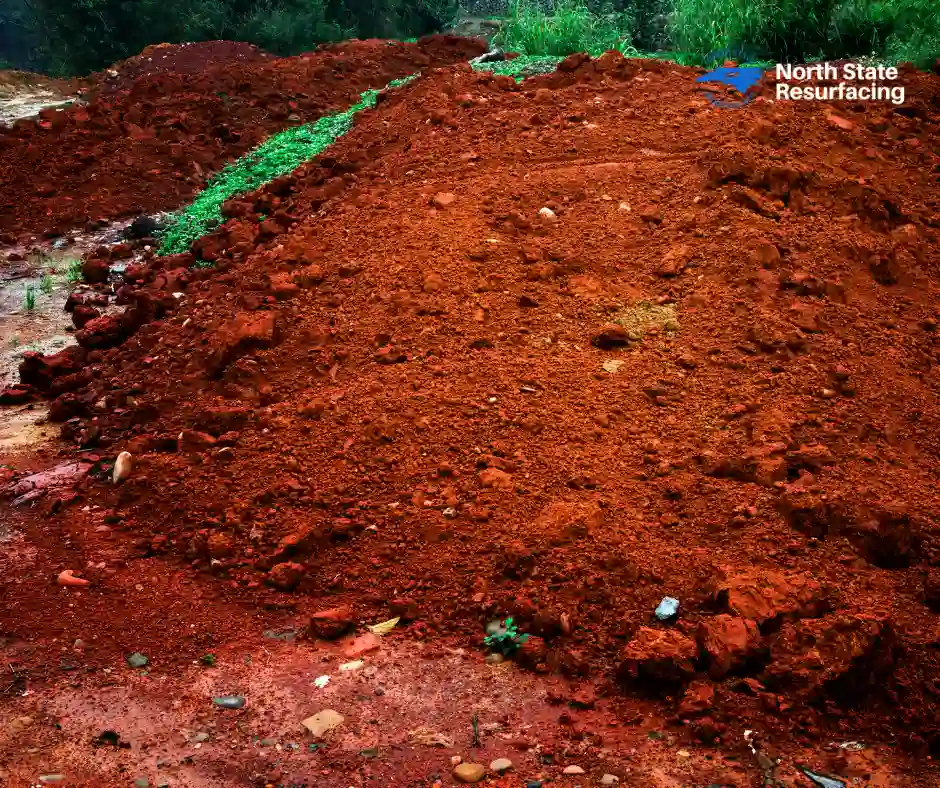
Much of the Triangle sits in North Carolina’s Piedmont, known for its iron-rich “red clay.” This clayey soil holds onto water, swells when wet, and shrinks as it dries. That constant expansion and contraction can cause shifting or settling over time if it’s not properly handled.
For a court, those soil movements can turn into cracking, uneven surfaces, and long-term maintenance headaches. That’s why builders in the Piedmont typically invest in thorough sub-base preparation, proper compaction, and sometimes engineered base layers rather than relying on native soil alone. Thorough upfront prep reduces the risk of future movement or damage.
Coastal Plain / Coastal Region (Eastern NC)
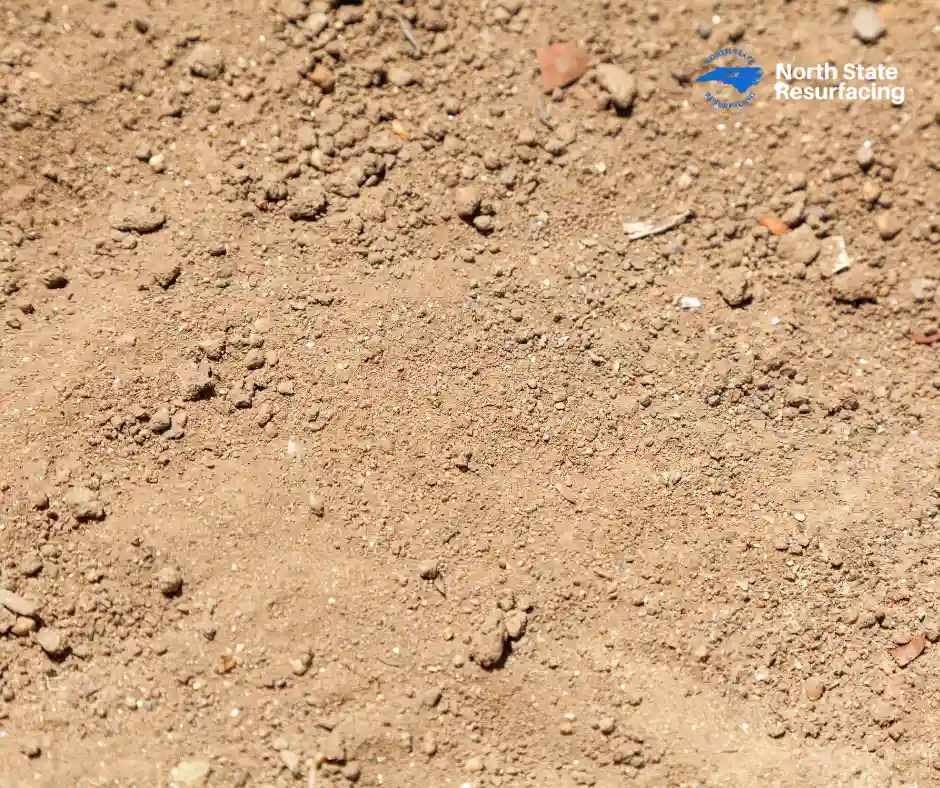
Head toward the coast and you’ll find the opposite soil profile: sandy, fast-draining ground that helps prevent water from pooling after storms. While that’s great for drainage, sandy soils can shift or settle more easily, which threatens the stability of a court if ignored.
When building on sand, it’s crucial to compact the base properly and consider adding a structural pad, like concrete, to keep the court from settling unevenly.
Mixed / Transitional Regions
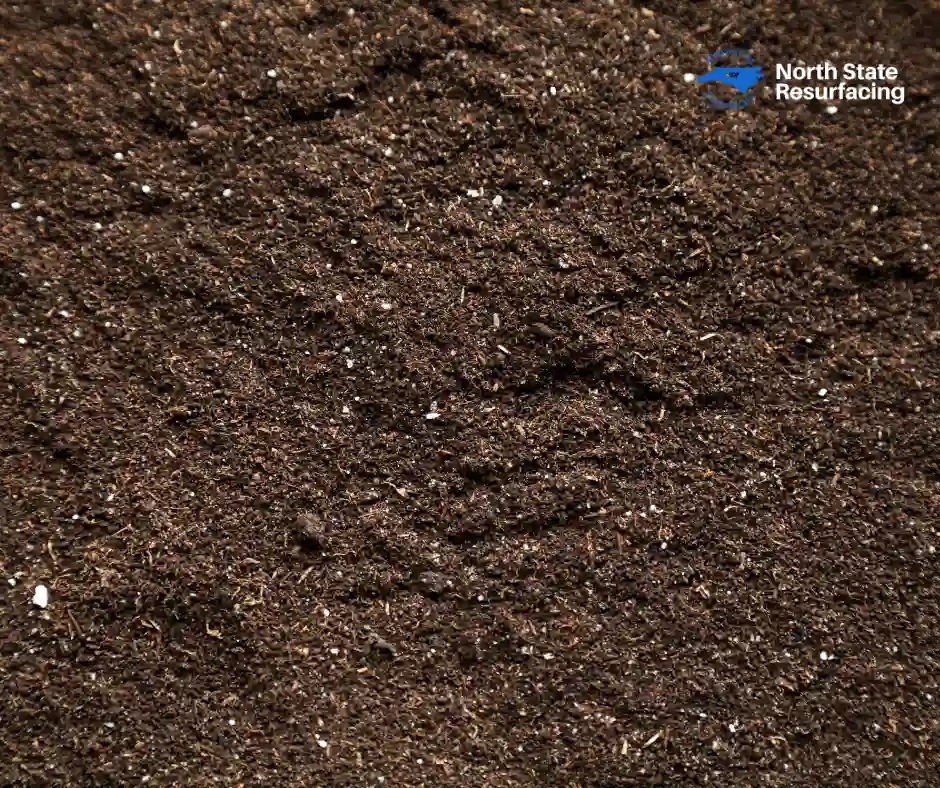
In many other parts of the state, soils fall somewhere in between. Loam or “mixed” soils combine sand, silt, and clay, offering a more balanced level of stability. Even so, they still need thoughtful drainage planning and solid compaction to support a long-lasting playing surface.
The bottom line: you can build a durable, high-quality pickleball court anywhere in North Carolina. You’ll just need the right engineering approach for the soil you’re working with.
Zoning, Permits & HOA Considerations
Just as with any new build or addition, it’s important to understand the rules and regulations you’ll need to abide by.
City
In many parts of the Triangle, especially within city limits, adding a permanent hardscape like a concrete court can trigger zoning or building code requirements. Even if smaller garden structures are allowed under certain residential zoning categories, a hard-surface court is typically viewed differently and may require permits or formal review.
Neighborhoods and Subdivisions
If you live in a neighborhood with a homeowners association, the rules can be even stricter. HOAs often have guidelines that regulate everything from aesthetics to impervious-surface limits to how much of your lot you’re allowed to develop.
Some associations require approval before you install anything that changes the appearance or layout of your yard, and a full-size court almost always qualifies. Checking your HOA covenants early and submitting plans if needed can save you a lot of time in the long run.
Newer subdivisions around the Triangle may also have specific site layout requirements. Minimum lot sizes, setbacks, or open-space rules can all impact whether a full court is allowed, or dictate where it must be positioned on your property.
Before you design or price out your court, look into both municipal (or county) zoning and building codes as well as any HOA or deed restrictions that apply. And if a permit is required, be sure to secure it before excavation, base preparation, or concrete work begins.
Climate & Drainage

North Carolina’s climate is as varied as its landscape, and when it comes to building a pickleball court, weather and water management matter just as much as soil type. From heavy rains to stubborn clay or shifting sand, proper drainage design is essential to keeping your court safe, level, and long-lasting.
Just like turf sports fields in North Carolina, courts benefit from engineered drainage solutions that move water away quickly and predictably. Builders often rely on:
Surface Grading
A slight slope (often just 1–2%) allows water to run off instead of collecting on the court. You’ll rarely notice the slope while playing, but it makes a major difference in long-term durability.
Subsurface Drainage
In heavier native soils, surface drainage alone may not be enough. Installing perimeter drains or subsurface drain lines can help channel water away from the base layers, preventing washout or expansion that leads to cracking.
Stabilized Bases
Where soils are especially reactive or unstable, builders often use compacted aggregate topped with concrete or other structural layers to ensure the court stays stable through wet seasons.
Tips for Designing a Court That Handles NC Weather
If you’re planning a pickleball court anywhere in the state, here’s what to keep in mind:
- Include a slight slope or perimeter drainage to guide water away efficiently.
- Avoid low-lying or flood-prone areas, even if they seem convenient.
- Use a well-drained, stabilized base (such as compacted aggregate beneath concrete) if you’re working with clay-heavy soils.
- Plan drainage early, not after the court is already designed. Retrofitting these systems is always more expensive and less effective.
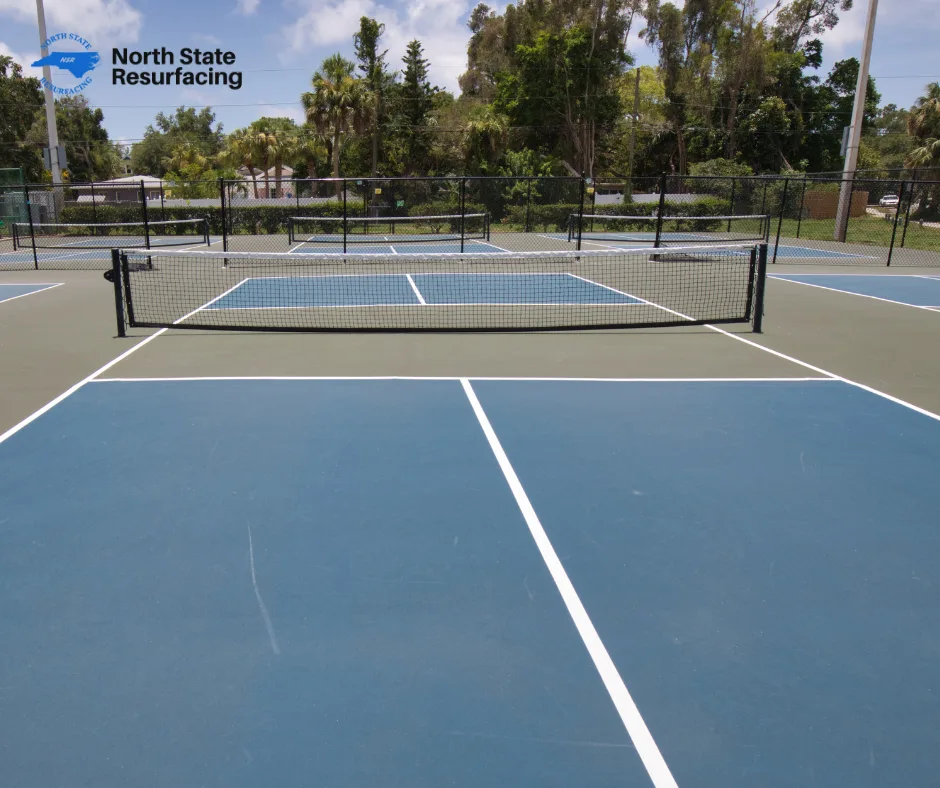
North Carolina weather is manageable, but only if your court is designed to handle rain, runoff, and soil movement. With thoughtful grading and drainage, you can protect your investment and enjoy a smooth, playable surface for years to come.
Region-by-Region Realities & What To Watch For
| Region of NC | Typical Soil / Terrain | Court-Building Considerations |
| Piedmont / Triangle (Raleigh–Durham–Chapel Hill, etc.) | Clay-heavy “red-clay” soils, mixed Ultisols, possible shrink-swell behavior | Invest in proper base prep, compaction, drainage; verify HOA & zoning codes; avoid flood-prone lots |
| Coastal Plain / Coast / Eastern NC | Sandy soils, loams, better natural drainage | Ensure base stability and compaction; monitor settling over time; verify site drainage in heavy rain |
| Mixed / Transitional areas | Loam or mixed soils (sand + silt + clay) | Balanced — easier than extreme soils, but still plan base prep & drainage carefully |
| Mountain / Western NC | Hilly / sloped terrain, rock, shallow soils | More complicated grading, possible need for retaining walls or specialized prep |
Your Pre-Build Checklist
Soil / Site Analysis First
Before anything, get a soil test or at least have a contractor evaluate soil type, drainage, slope. Know whether you’re dealing with clay, sand, loam, or rock.
Design a Proper Base
For clay soils, don’t rely on native soil. Use a compacted aggregate base (gravel + crushed stone) or engineered pad, then pour concrete or install proper court tiles.
Drainage & Grading
Add surface slope (0.5%–1% ideally) or drainage features so water doesn’t pool. Consider perimeter drains if soil drains poorly.
Check Zoning / HOA / Permits
Review local zoning regs, building codes, HOA covenants or deed restrictions. Apply for required permits before construction.
Plan for Use & Longevity
Choose durable surfacing materials (e.g. concrete, modular court tiles), and design around possible expansion/contraction (especially in clay soils).
Neighbor & Aesthetic Considerations
A court (concrete slab, net, fence) may impact neighbors’ view, drainage, or neighborhood look. Address these — especially under an HOA — to avoid conflicts.
Why the Triangle Is a Smart Place for Pickleball Courts
The Triangle area of NC is booming, seeing major growth in population, new neighborhoods, and demand for recreational spaces. This makes it a natural hotspot for private or community courts. However, because the local soils tend toward clay and many homes are built in subdivisions with HOAs or strict zoning/deed restrictions, building a stable, long-lasting pickleball court there requires careful planning.
If done right with proper drainage, base prep, and legal compliance, a Triangle-area court can offer years of low-maintenance recreation for homeowners or communities. That said, cutting corners increases the risk of foundation/settlement problems, conflicts, or even court resurfacing needs down the line.
For Triangle homeowners or communities especially: plan ahead. The soil is tricky, but with the right base and preparation, you can end up with a durable, high-quality court that’s a big value-add.