
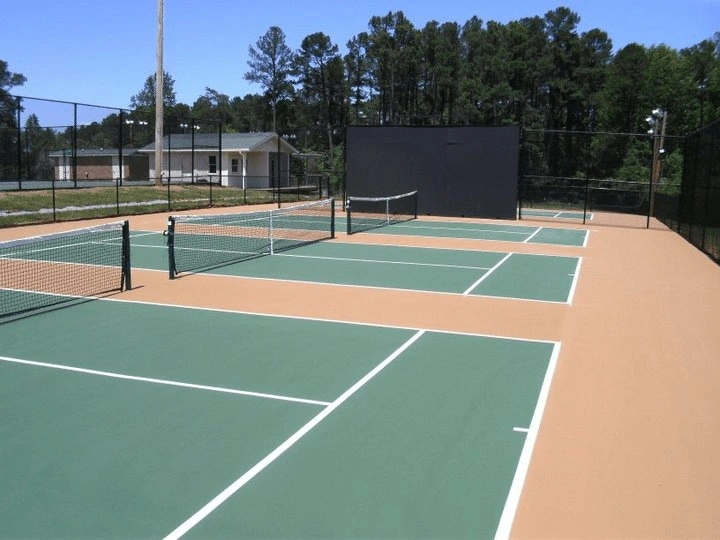
If you’re thinking of adding a tennis court to your property, you’ll want to be aware of all the possible court surfaces you have to choose from. At North State Resurfacing, we are committed to helping our clients choose a material that makes sense for their needs and their budget.
We stand by Polypave Court Shield as the choice that gives sports enthusiasts many major benefits over post-tensioned concrete courts and other surfaces when it comes to court resurfacing. To help you understand why, we’re going to look at post-tension concrete options and the Polypave Court Shield to explain the differences, and explore how the Polypave Court Shield outperforms post-tensioned concrete tennis courts in several different ways.
Table of Contents
Introduction to Tennis Court Surfaces
When planning to build or renovate a tennis court, selecting the right surface material is one of the most critical decisions you’ll make. The type of surface you choose, whether it’s traditional asphalt, post-tension concrete, or a more advanced system, will directly affect the court’s durability, ongoing maintenance costs, and the quality of play for years to come.
Traditional asphalt courts have long been a preferred method due to their affordability and ease of installation, but they are prone to cracking and often require frequent resurfacing.
Post-tension concrete courts, on the other hand, use tensioned cables within the concrete slab to create a more durable and crack-resistant surface, making them a popular choice for those seeking long-term performance.
Each material has its own set of benefits and challenges, from the initial installation process to the way the surface responds to weather and heavy use. Understanding these differences is essential for anyone looking to construct a new tennis court or upgrade an existing one, ensuring you choose a surface that meets your needs for playability, longevity, and cost-effectiveness.
What are Post-Tensioned Concrete Tennis Courts?
Because the concrete is held together with tendons, PT courts are more durable than asphalt courts or courts made from some other materials.
Post-tension concrete courts are made by pouring concrete over cables that extend from one end of the court to the other. As the concrete hardens, these cables are mechanically tightened. This process creates tensions within the concrete to prevent large cracks that may occur with asphalt courts. Post-tensioned slabs help prevent issues such as heaving and settling, which are common problems in traditional tennis court construction.
The use of post-tensioned concrete slabs as the foundational structure provides a stable and crack-resistant surface, minimizing the risk of heaving and settling over time. Post-tensioning concrete courts are known for their long-term durability and can reduce ongoing maintenance costs and downtime for potential repairs.
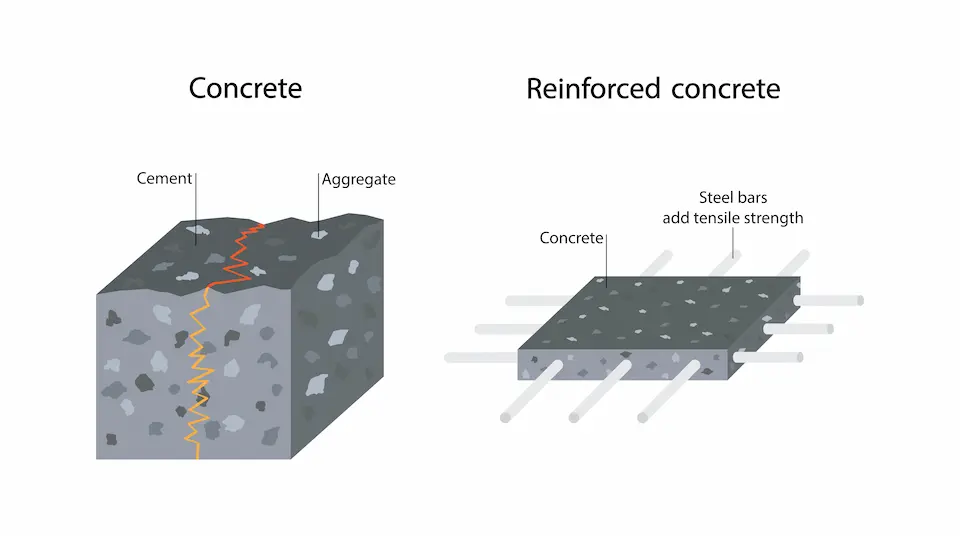
Post-tensioned concrete tennis courts also have less vibration than traditional asphalt tennis courts and better waterproofing capabilities for drainage.
The upfront cost to build a PT concrete court is nearly twice as much as an asphalt court. While they do last longer than traditional asphalt courts, any concrete tennis court or other type of hard surface court will still need to be resurfaced every five years or so. If there are any cracks, these will have to be repaired before any resurfacing is done.
What is a Polypave Court Shield?
The Polypave Court Shield System is a process developed for and distributed by North State Resurfacing to help prevent the appearance of cracks on court surfaces. It uses the latest technologically advanced materials to create a mechanical reinforcement of the tennis court surface.
The Polypave Court Shield System is an economical and efficient alternative to post-tensioned concrete for new tennis courts, updating existing courts, and other recreational surfaces. It offers superior crack prevention capabilities at a fraction of the cost of post-tensioned concrete courts.
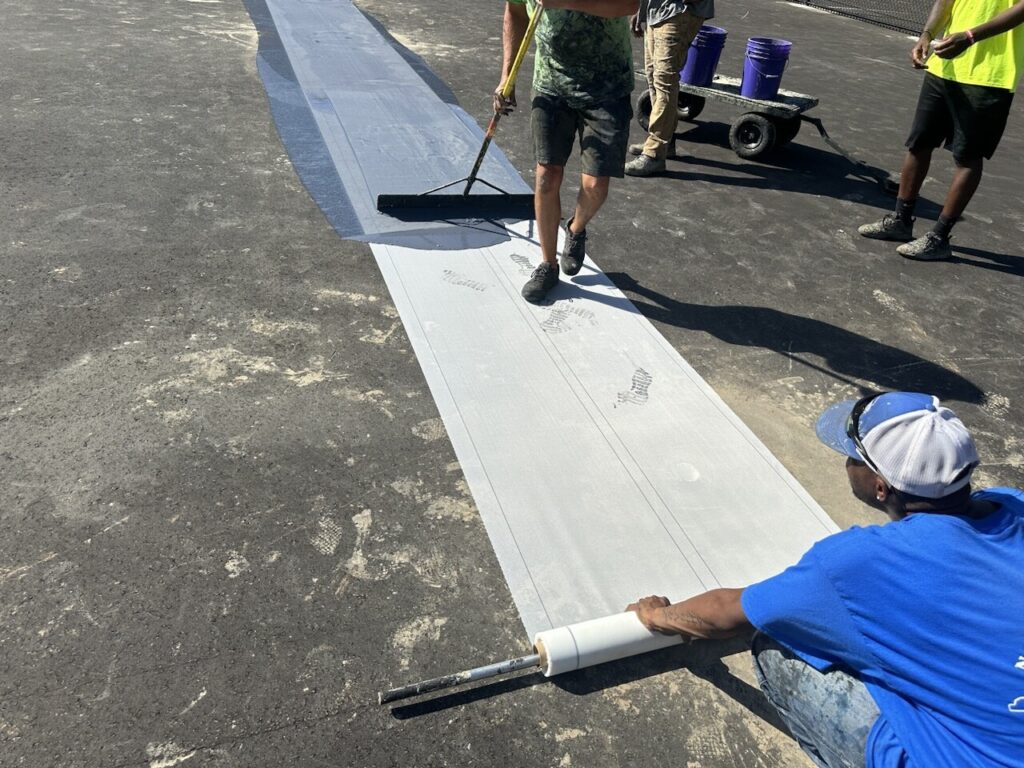
With the Polypave Court Shield system, a soft polyester fabric is applied to the entire court surface using a mixture of acrylic binders. This works to create a mechanical reinforcement to prevent cracks from forming and to strengthen the surface. There are no cables involved and no cable tightening is needed.
How Polypave Court Shield Differers from Post-Tension Concrete Courts
Choosing between Polypave Court Shield and post-tensioned concrete courts comes down to understanding several key factors: installation complexity, crack prevention methods, maintenance, cost, and long-term performance. Other factors, such as project scope, existing structures, and technical requirements, can also influence your decision between these court systems.
The exact costs and benefits may vary depending on the number of courts and specific site conditions. Here’s how these two options compare across the most important categories.
Installation Process
Post-Tensioned Concrete: The installation of a post-tensioned (PT) concrete court is a complex and labor-intensive process. It involves laying a concrete slab over a network of steel cables, which must be precisely tensioned after the concrete sets. This requires highly skilled contractors familiar with the post-tensioning process. Because of the multiple stages and timing involved in this method, the risk of cold joints, areas where new concrete is poured next to concrete that has already started to set, can increase. These cold joints can weaken the slab’s structural integrity and become vulnerable points for cracking if not handled properly.
Other mistakes during installation, such as improper tensioning or cable alignment, can lead to structural issues or internal cracking down the line. These errors may result in potential liability for future repair costs or legal risks if the court develops significant problems.
Polypave Court Shield: In contrast, the Polypave Court Shield System has a much simpler installation. It does not rely on embedded cables or mechanical tensioning. Instead, a soft polyester fabric is applied across the court surface and bonded using a proprietary acrylic mixture. This method reinforces the surface without the risk of tensioning errors or complex structural requirements. The result is a faster, more straightforward installation with fewer opportunities for error.
Crack Prevention and Structural Integrity
Post-Tensioned ConcretePT concrete courts are designed to reduce cracking by keeping the slab under constant internal tension. However, if cracking does occur, especially below the surface, it can widen over time. These subsurface cracks are more difficult and costly to repair, and if improperly managed, they can lead to further damage. |
Polypave Court ShieldThe Polypave system prevents cracks from forming in the first place by acting as a surface-level mechanical reinforcement. It flexes slightly with the underlying structure, absorbing stress and distributing it more evenly across the surface. This significantly reduces the likelihood of visible or structural cracks and eliminates the need for cable-based reinforcement. |
Maintenance and Lifespan
Post-Tensioned ConcreteWhile PT courts are more durable than asphalt and typically require less frequent maintenance, they still need resurfacing approximately every five years. Any visible cracks must be repaired before resurfacing, and underlying issues may be more difficult to diagnose due to the thickness and structure of the slab. |
Polypave Court ShieldPolypave courts also need resurfacing at similar intervals, but they are easier and less expensive to maintain. Because the system is designed to reduce crack formation from the start, surface repairs are often minimal. The reinforcement layer remains effective for years, extending the useful life of the court without the complications of internal concrete tension. |
Cost Effectiveness
Post-Tensioned ConcreteBuilding a post-tensioned concrete court is significantly more expensive than other options. In many cases, the initial cost is nearly double that of an asphalt court. While it does offer durability, the upfront investment can be a deterrent, especially for residential or budget-conscious facilities. |
Polypave Court ShieldThe Polypave Court Shield is a more economical choice, offering superior crack prevention without the high costs associated with PT concrete. It’s not only less expensive than post-tensioned concrete, but in many cases, also more affordable than traditional asphalt courts, without compromising on performance or durability. |
Time to Completion
Post-Tensioned ConcreteDue to the technical nature of post-tensioning and the curing time required for the concrete slab, the total construction time for PT courts is relatively long. |
Polypave Court ShieldPolypave courts require significantly less construction time. Since the system is installed over an existing surface and doesn’t involve structural cables, projects can be completed more quickly, getting players back on the court sooner. |
Construction and Renovation Considerations
Building or renovating a tennis court involves several important considerations to ensure a high-quality, long-lasting playing surface.
The choice of surface material is key: post-tension concrete courts require a specialized process where concrete is poured over steel cables (tendons) that run from one end of the court to the other. These cables are then mechanically tightened to create internal tension within the slab, helping to prevent cracks and structural issues. This method demands precise execution and a skilled team to manage the process, from proper cable placement to ensuring effective drainage and a smooth finish.
Asphalt courts, by comparison, are constructed by laying asphalt over a prepared subbase, offering a more straightforward installation but with a higher likelihood of cracking and the need for resurfacing.
Regardless of the surface type, it’s critical to hire experienced professionals who understand the unique requirements of tennis court construction, including factors like slope, drainage, and finishing techniques. Careful planning and expert installation will help you achieve a court that not only looks great but also stands up to years of play and changing weather conditions.
Benefits of the Polypave Court Shield
The Polypave Court Shield System has many benefits compared to post-tensioned concrete courts and other materials. This is a preferred method of court resurfacing for the following reasons:
- Since the Polypave System covers the entire court surface, not just one area, you can better protect the surface and have a more even court.
- The polyester fabric works to absorb the movement of the pavement and reduce the stress on the surface that can lead to cracks.
- The soft polyester that is used in the Polypave system was originally made as a roofing product. With the right combination of acrylic binders, it was found to be successful on paved surfaces as well.
- Opting to use the Polypave Court Shield System before cracks get worse can help extend the court’s longevity and prevent more maintenance.
In addition, the Polypave Court Shield system offers a variety of customization options, including different fencing materials and layouts. This allows you to tailor the court to your specific needs and aesthetic preferences.
When you choose North State Resurfacing to use the Polypave Court Shield System, you can expect a smooth finished surface that you can use for years to come. We will make sure that the application is uniform across the entire surface to produce the best playing surface. There is also the possibility for schools, clubs, and organizations to implement the Polypave Court Shield system as an alternative to traditional court construction.
Contact North State Resurfacing for All of Your Court Needs
If you are looking to install the Polypave Court Shield on your next court, contact North State Resurfacing. Our team is committed to helping you have the best courts for all the sports you intend to play. We can take care of all of your resurfacing needs.
Contact us today at (919) 365-7500 or fill out the form below to learn more about how North State Resurfacing can get the job done!